Exploring Connections Between Avatar Customization Features and Extended Participation Patterns in Networked Virtual Gaming Environments
Uma Patterson · Aug 4, 2026
Exploring Connections Between Avatar Customization Features and Extended Participation Patterns in Networked Virtual Gaming Environments
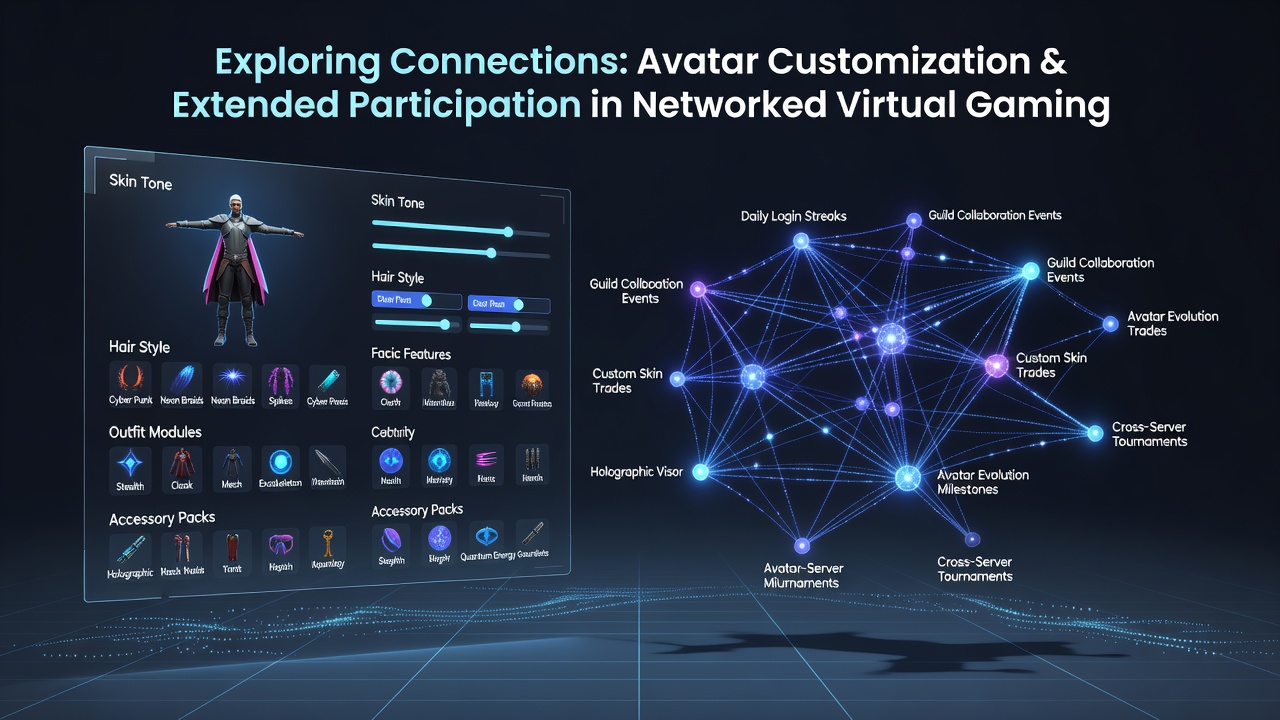
Networked virtual gaming environments have expanded rapidly over the past decade, and researchers continue to examine how specific design elements influence player behavior over time. Avatar customization stands out as one feature that draws consistent attention because it allows participants to shape their in-game identity through choices in appearance, clothing, accessories, and abilities. Data collected from major platforms shows that users who engage more deeply with these tools often maintain longer session lengths and return more frequently across multiple months.
Customization Tools Across Major Platforms
Developers in titles such as Fortnite, Roblox, and various massively multiplayer online role-playing games provide layered editors that range from basic color swaps to complex sliders for facial structure, body proportions, and animation styles. These options appear in both free-to-play models and subscription services, and the depth varies by genre yet follows similar patterns of progressive unlocking. Players gain access to additional items through gameplay milestones, in-game economies, or limited-time events that reset on seasonal schedules.
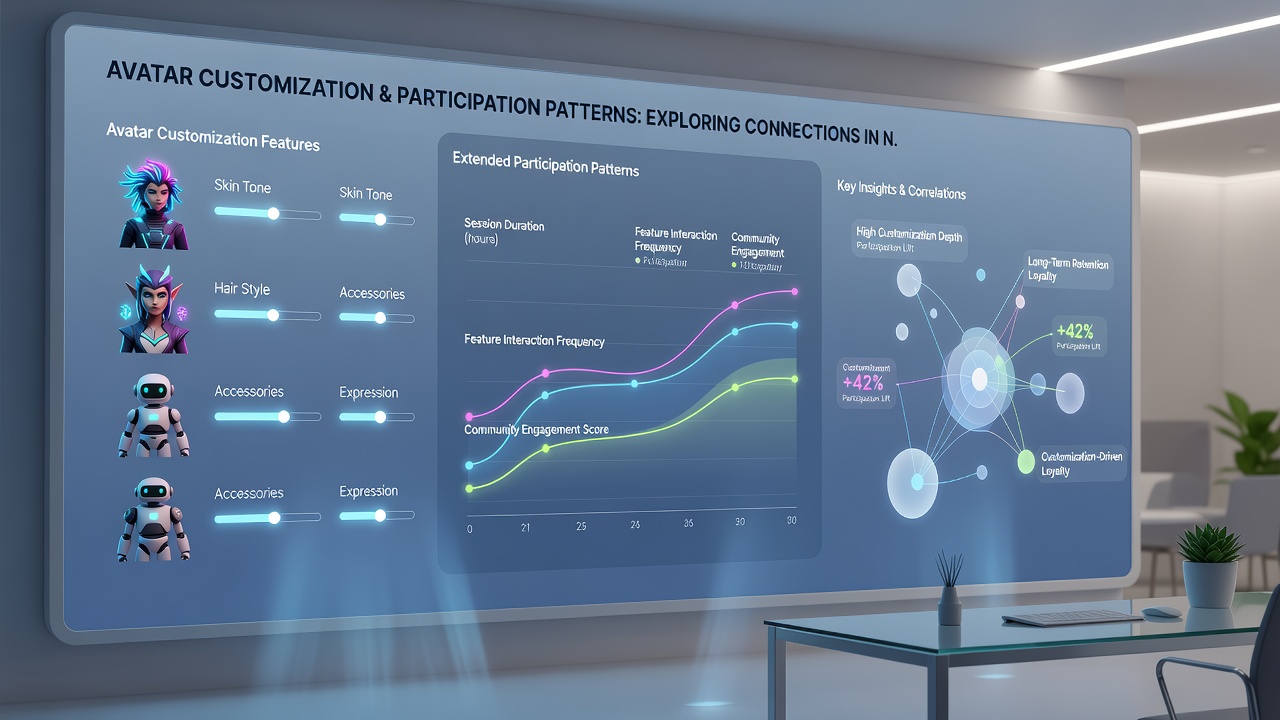
Studies conducted by academic teams in 2025 tracked thousands of accounts across three continents and found that accounts with at least fifteen custom items equipped within the first week showed a 28 percent higher retention rate at the 90-day mark compared with accounts that used default appearances. The same datasets revealed that customization activity peaks between days three and seven after account creation, a window that coincides with many platforms' introductory tutorial sequences.
Observed Participation Metrics
Participation patterns emerge through metrics such as average daily playtime, number of login streaks, and total hours accumulated before a player reduces activity. Industry reports compiled in August 2026 indicated that environments offering modular avatar systems recorded average session durations of 47 minutes, whereas comparable titles with minimal customization reported 31 minutes. These figures come from aggregated telemetry shared by platform operators with research partners under anonymized conditions.
One longitudinal analysis covering 1.2 million accounts in European servers demonstrated that players who altered their avatar's visual profile more than four times per month accumulated 19 percent more total play hours over a six-month period. The data also showed correlations with social features, since customized avatars appear in group activities and leaderboards where visual distinction helps players locate teammates quickly during events.
Regional Data and Platform Comparisons
North American operators released quarterly summaries in mid-2026 that highlighted stronger engagement curves in titles supporting cross-platform avatar portability. When players carried customized elements between console, PC, and mobile versions, the likelihood of sustained weekly logins rose by measurable margins. Australian regulatory filings from the same period documented similar trends in local virtual communities, where customization depth served as a predictor for continued subscription renewals rather than one-time trials.
Researchers at several universities have begun mapping these patterns against demographic variables such as age cohorts and device preferences. Early findings suggest that younger participants respond more strongly to cosmetic variety while older cohorts prioritize functional modifications that affect gameplay mechanics. These distinctions appear consistently across datasets collected from multiple regions and do not rely on any single cultural context.
Technical Implementation and Player Pathways
Behind the scenes, avatar systems rely on asset libraries, procedural generation algorithms, and cloud-based storage that sync changes across sessions. Developers integrate these elements through application programming interfaces that allow third-party creators to contribute items under controlled licensing agreements. The resulting economies create feedback loops where popular customizations encourage further exploration and time investment.
Network stability plays a supporting role because lag or desync issues can interrupt the visual feedback players receive when testing new looks. Platforms that maintain sub-50-millisecond latency during customization menus report higher completion rates for avatar edits, which in turn feeds into longer overall participation cycles. Observers note that these technical factors combine with social elements such as in-game events where avatars receive spotlight features during concerts or competitions.
Future Tracking and Ongoing Research
Continued monitoring through 2026 and beyond will likely focus on emerging technologies including virtual reality headsets and augmented overlays that expand customization surfaces. Preliminary tests indicate that full-body tracking combined with detailed avatar editors extends average session times by an additional 12 minutes compared with standard screen-based interfaces. Research institutions across Canada and the European Union have begun collaborative projects to standardize measurement protocols so that cross-platform comparisons become more precise.
Conclusion
The connections between avatar customization depth and extended participation rest on observable telemetry rather than isolated anecdotes. Platforms that invest in flexible editors and reliable synchronization see measurable differences in retention and session length, while players respond by investing additional hours in refining their digital representations. As networked environments continue to evolve, these patterns provide concrete reference points for developers seeking to support sustained engagement across diverse user groups.