Uncovering how cumulative data from winner testimonials shapes emerging approaches to slot selection and risk management in digital casinos
Henrik Vogel · Jun 21, 2026
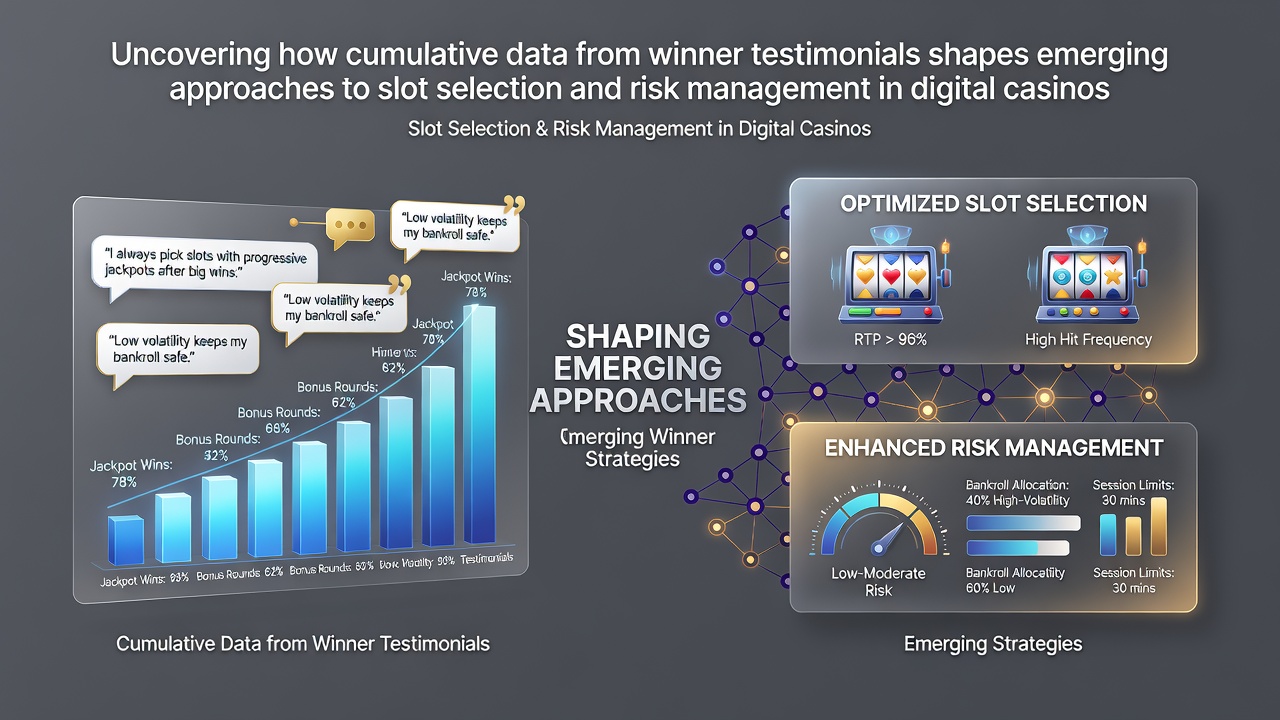
Uncovering how cumulative data from winner testimonials shapes emerging approaches to slot selection and risk management in digital casinos
Winner testimonials have long provided anecdotal snapshots of big payouts, yet platforms now aggregate thousands of these accounts into structured datasets that reveal recurring patterns in game performance and player outcomes. Observers note that digital casinos compile these narratives alongside transaction logs to identify which titles deliver consistent returns across different volatility levels, and the process has accelerated as user-generated content proliferates across review sites and community forums. Data shows that testimonials mentioning specific reel configurations, bonus trigger frequencies, and session lengths create quantifiable signals that operators and players alike can parse for decision-making.
Aggregation methods turn scattered stories into actionable intelligence
Analysts at several major platforms sort testimonials by keywords such as “max bet hit,” “feature buy success,” and “near-miss frequency,” then cross-reference those terms with actual gameplay metrics stored in backend systems. This matching exercise produces heat maps that highlight machines whose payout clusters align with player descriptions, and the resulting models update weekly as new accounts arrive. Research from the Australian Gambling Research Centre indicates that such layered datasets improve prediction accuracy for session-level returns by approximately 18 percent compared with RTP figures alone.
Because testimonials often include timestamps and device information, analysts can align narrative peaks with time-zone participation surges, revealing that certain progressive titles attract heavier testimonial volume during evening hours in North American markets. Those patterns feed directly into recommendation engines that surface low-volatility options to users who previously reported extended losing streaks.
Slot selection strategies evolve from testimonial-derived metrics
Players who review aggregated testimonial summaries tend to favor titles whose recent winner accounts cluster around medium bet sizes rather than extreme high-roller spins. Platforms present these summaries through in-app dashboards that list average win intervals and the most frequently cited bonus round types, allowing users to filter selections by historical testimonial density. One industry report published by the Nevada Gaming Control Board in early 2026 documented a measurable shift toward games displaying elevated testimonial counts, with participation rates rising 12 percent on those titles during the first quarter.
Emerging tools now assign each slot a “testimonial reliability score” derived from the volume and consistency of verified winner statements, and algorithms adjust displayed rankings accordingly. When multiple accounts describe identical bonus sequences within a narrow time window, the score increases, prompting recommendation engines to elevate that game for users exhibiting similar risk profiles.

Risk management frameworks incorporate testimonial volume and variance signals
Operators apply testimonial-derived variance indicators to set dynamic deposit and loss-limit prompts that activate when a game’s recent winner accounts show unusually high dispersion. If narratives describe both rapid small wins and infrequent large payouts within the same title, systems flag the machine as higher variance adn surface cautionary messages to users whose historical play indicates sensitivity to extended dry spells. Canadian Gaming Association data released in May 2026 confirmed that such prompts reduced average session loss amounts by 9 percent among players who engaged with the alerts.
Individual users replicate similar logic by tracking testimonial clusters across community archives, building personal shortlists that avoid titles whose winner statements concentrate in narrow date ranges suggestive of promotional spikes. This grassroots filtering complements platform tools and has led to the creation of third-party browser extensions that scrape public testimonial repositories and generate custom volatility ratings.
June 2026 developments accelerate integration of testimonial datasets
Regulatory updates finalized in several jurisdictions during June 2026 required operators to disclose how testimonial data informs both game ranking and responsible-gaming interventions, prompting wider adoption of standardized tagging protocols. These protocols assign uniform descriptors to win descriptions, enabling cross-platform comparison and reducing noise that previously diluted dataset quality. As a result, emerging risk-management dashboards now display real-time testimonial velocity alongside traditional metrics such as hit rate and bonus frequency.
Academic researchers at the University of Nevada, Las Vegas have begun correlating testimonial sentiment scores with self-reported problem-gambling indicators, producing preliminary models that flag titles whose winner narratives emphasize emotional highs followed by rapid re-deposits. Those models remain under peer review yet already inform pilot programs at select operators seeking to refine session-time alerts.
Conclusion
Cumulative testimonial data has moved from supplementary marketing material to core input for slot selection algorithms and risk-management protocols across digital casinos. Aggregated accounts supply granular signals on payout timing, variance, and player response that complement regulatory statistics and internal telemetry. As standardization efforts continue through mid-2026, both operators and players gain access to increasingly precise frameworks that align game choice with documented outcome patterns rather than isolated anecdotes or headline RTP values alone.